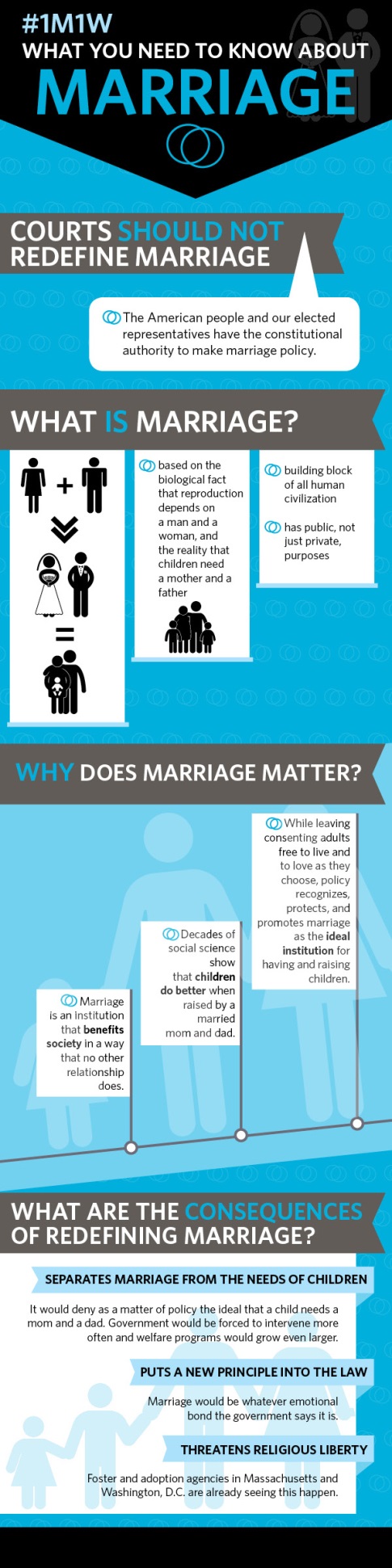
.

.

Pentagon Doesn't Deliver the Male


Defense Secretary Ash Carter said his Department is trying to "lead boldly on sexual assault." Well, it's leading all right -- but in all the wrong categories. Attacks are through the roof, despite millions of dollars thrown at prevention. Things are so desperate, the Air Force admits, that it's bringing in relationship experts for "May I kiss you?" training.
In a talk to ROTC cadets Wednesday, Secretary Carter -- who inherited this mess after almost seven years of Obama's social engineering -- admitted that the military has a long way to go in cleaning up its act. Last year, he explained, thousands more men (10,400) were sexually assaulted than women (8,500) -- proving once again how misguided the crusade for open homosexuality was. "...[A]ltogether, that's 18,900 too many," Carter said. "No man or woman who serves in the United States military should ever be sexually assaulted."
A little over four years ago, Congress ignored the warnings of several leaders and charged ahead with its repeal of "Don't Ask, Don't Tell" against the military's advice. Under pressure from the White House, the Pentagon downplayed the effects of open homosexuality when it was implemented in 2011 -- something it's having a tough time doing now, with the rate of male-on-male abuse. And even Carter believes that's a low estimate -- in part because men are so reluctant to report abuse, especially from other men.
Defense officials are racing to reassure people that they're doing everything they can to get to the bottom of these issues -- only to inject more policies that accelerate both. They put political correctness ahead of national security and then seem surprised when both the nation and the people that protect us are at risk. Until that changes, every service member will be a victim of this sexually-charged environment.

Primer: Ten things you need to know about the US Supreme Court “gay marriage” case being heard April 28, 2015

POSTED: April 24, 2015 UPDATED April 26, 2015   MassResistance
http://www.massresistance.org/docs/gen2/15b/SCOTUS-marriage-case/index.html

On April 28 the US Supreme Court case will hear oral arguments for the case that will essentially decide whether “gay marriage” is a previously unknown “fundamental right” enshrined in the US Constitution, similar to the Court’s 1973 abortion ruling.

What was once a fringe, unthinkable idea is now on the verge of being imposed on the entire nation.

What is happening? Here are ten things to know about this case:
1. How we got to this point

The popular sentiment against “gay marriage” in the United States has been overwhelmingly one-sided at the ballot box. Since 1998, 30 states have passed constitutional amendments banning it. Some of these amendments were passed by huge margins (as high as 80%). This appeared to everyone to be an insurmountable obstacle to the “gay marriage” movement.

After losing in state after state, the homosexual movement realized that it could never overturn these amendments legitimately. In very blue states, using massive amounts of money, they were able to successfully lobby legislatures and sway elections. But the amendments across the country were a problem.

So they decided to focus on perfecting the strategy that worked in Massachusetts in 2003: using the courts and hand-picked activist judges, along with very shrewd manipulation of the legal process and well-funded legal teams and political strategists. They crafted a plan to get the state amendments declared unconstitutional.

This strategy took advantage of the LGBT lobby’s well-funded propaganda push over the last few decades in law schools, law firms, and judicial chambers, as well as a fresh new generation of radical federal judges appointed by Barack Obama.

Starting with California in 2009, where a homosexual judge overturned the Proposition 8 vote, they soon picked up momentum. Across the country, the various cases began sailing through the state and federal courts largely unimpeded. It was quite frightening for all of us to watch.

Other factors helped keep it going. The almost universal unwillingness of the legal teams on the pro-family side to aggressively confront the other side’s arguments gave them a free pass on what could have been difficult issues to overcome. And a number of pro-gay “marriage” Democrat (and RINO Republican) Governors and Attorneys-General simply refused to properly defend the cases and/or appeal them after losing.

Using both state and federal courts, the LGBT lobby has now gotten activist courts to “overturn” 26 of the 30 state constitutional amendments. (Some of these cases are still being appealed.)

But on November 6, 2014, their string of successes hit a snag, as the Sixth Circuit Court of Appeals ruled in favor of the Ohio constitutional amendment. However, since this disagreed with the other Federal District Court rulings, it bumped the case up to the Supreme Court, which agreed to hear it and make a broad decision.

2. How the 14th Amendment is used to push the radical agenda in the courts

In all these cases (as in countless other “progressive” legal challenges over the years) the radicals have used twisted interpretations of the US Constitution’s Fourteenth Amendment to advance their agenda through the courts.

The Fourteenth Amendment says:

No state shall make or enforce any law which shall abridge the privileges or immunities of citizens of the United States; nor shall any state deprive any person of life, liberty, or property, without due process of law; nor deny to any person within its jurisdiction the equal protection of the laws.

The “due process” and the “equal protection” clauses are the hammers used to smash the existing laws and constitutional amendments. Along with that, the LGBT lawyers start with the assumption (which our side could easily refute, but doesn't) that “sexual orientation” constitutes a class of citizen (based on an immutable characteristic, etc).

Regarding the “equal protection” argument: They argue that “gays” are not allowed to marry the ones they love, but heterosexuals are. They say that “gays” are thus “demeaned,” made “second class citizens,” and kept “unequal” – and this causes them terrible harm.

They further argue that not recognizing “gay marriages” from other states is a violation of due process because of the Constitution’s “full faith and credit” clause.

Of course, this is all legal nonsense. The answer to their “equal protection” argument is simple: Under the law, every person can only marry someone of the opposite sex. The marriage laws apply to every person equally. No legal expert we’ve consulted has disagreed with us on that reasoning. And everyone gets the same “due process” under it. Unfortunately, to our knowledge these points are rarely used to buttress our side’s argument.

Furthermore, the “full faith and credit” clause was never meant to be used to alter the meaning of the word marriage (i.e., plural marriages, incestuous marriages, marriages to young children), but only the application to a marriage case (or a divorce, etc.,) where the meaning of the word marriage was commonly agreed upon. It’s pretty simple – unless you’re an activist judge.

3. What this case is specifically meant to decide

The case is officially named Obergefell v. Hodges, which is a consolidation of four “gay marriage” cases previously brought before the Sixth Circuit.

According to the court documents, this case addresses only two specific questions:


       1) Does the Fourteenth Amendment require a state to license a marriage between two people of the same sex?

       2) Does the Fourteenth Amendment require a state to recognize a marriage between two people of the same sex when their marriage was lawfully licensed and performed out-of-state?

On April 28, a total of 90 minutes is allotted for oral argument on question #1, and a total of 60 minutes is allotted for oral argument on question #2. As discussed above, in any normal circumstance this would be a no-brainer.

Not surprisingly, there have been dozens of amicus briefs filed for this case. (You can read them here.) Most of those filed by our side discuss the importance of marriage in society, the historical roots of marriage, how imposing “gay marriage” would divide the country, children needing a father and a mother, etc. None that we’ve seen actually addresses the two questions regarding the Fourteenth Amendment which this case is about. We can only surmise that people are assuming that the Justices are not actually focusing on strict constitutional law but on these unrelated issues.

4. The lawyers arguing this case on April 28

The competition to represent the pro-family side was definitely not as intense as for the “gay marriage side.”

Arguing for the pro-family side: Eric E. Murphy is the current Ohio State Solicitor, who won the appeal before the Sixth Circuit after losing in District Court. John J. Bursch was Michigan State Solicitor from 2011-2013 and has argued eight times before the US Supreme Court. According to news reports, Bursch’s current firm,Warner Norcross & Judd, supports “gay marriage” and has refused to be involved in this case to help him, so he is working independently.

Both attorneys have a good reputation for competence.

Eric E. Murphy, State Solicitor
Office of the Attorney General
30 East Broad Street, 17th Fl.
Columbus, OH 43215-3428
(614) 466-8980
eric.murphy@ohioattorneygeneral.gov

John J. Bursch
Michigan Dept of Attorney General
P.O. Box 30212
Lansing, MI 48909
(517) 373-1124
BurschJ@michigan.gov

Arguing for the homosexual “marriage” side: Alphonse A. Gerhardstein is a prominent civil rights attorney from Cincinnati. Mary Bonauto is the celebrity lesbian attorney for Gay and Lesbian Advocates and Defenders, who won the original Goodridge “gay marriage” case in Massachusetts in 2003. We at MassResistance know Bonauto well. She argued the lawsuit against us (unsuccessfully) in the infamous “Fistgate” case, and we have debated her on television.

We don’t know much about Gerhardstein. In our opinion, Bonauto is not particularly impressive.

Alphonse A. Gerhardstein
Gerhardstein & Branch Co. LPA
432 Walnut St., Suite 400
Cincinnati, OH 45202
(513) 621-0779
agerhardstein@gbfirm.com

Mary L. Bonauto
Gay & Lesbian Advocates & Defenders
30 Winter Street, Suite 800
Boston, MA 02108
(617) 426-1350
mbonauto@glad.org

(Contact information is from Supreme Court filings.)

5. Anticipated problems with our side’s arguments

The other side’s arguments rarely bother dealing with the strict constitutional meaning of the text in question. They are almost exclusively based on the assumption that “sexual orientation” constitutes a legitimate legal “class” of people who are “born that way,” and as such have innate rights as a “class.” The concept of a “class” of people is foreign to the text of the Constitution. But it has nevertheless been accepted by courts for decades and undoubtedly by a number of the Supreme Court Justices.

That concept must be vigorously confronted and debunked. Unfortunately, our lawyers have been afraid to do that. Instead they concede to it and attempt to make a persuasive argument within those absurd boundaries — i.e., every child needs a mother and father, marriage is an institution for procreation, etc. This strategy almost always fails.

Why does our side avoid a strong argument? The answer falls into two categories:


         1. Fear of being accused of “animus.” Our lawyers have internalized the idea that any perception of “animus towards gays” in their arguments will alienate the Justices. After all, gays are a “class” of people. This forces out any discussion of anything that debunks that, such as the horrible medical consequences associated with homosexual behavior: diseases, addictions, mental health problems, domestic violence, lower life expectancy, etc. Or any suggestion that is an immoral, unnatural perversion. Or the proven damage to children raised in same-sex households.

          2. Pandering to “rational basis.” There is an extra-constitutional concept that judges have the authority to overturn a law if it doesn’t appear rational to them. Whether or not it was “rational” to a legislature or to the people makes no difference. Thus, the LGBT lawyers simply state that it’s “not rational” to exclude the class of “gays” from marrying whomever they want. It’s been one the basis for overturning constitutional marriage amendments. Our lawyers fear being judged “irrational” if they bring up the uncomfortable aspects of homosexuality, so they stick to the “comfortable” arguments.

It’s about time to quit doing what doesn’t work. Our fear, unfortunately, is that the lawyers on our side have been working closely with pro-family establishment lawyers in Washington DC (and we all know who they are) who are anything but aggressive or confrontational on these issues.

6. When the Court will issue a decision
The Court will issue its ruling before its current term ends in late June – i.e., within two months.

7. Why Justices Ginsburg and Kagan must legally recuse themselves from this case
Federal law 28 U.S. Code § 455 states:

Any justice, judge, or magistrate judge of the United States shall disqualify himself in any proceeding in which his impartiality might reasonably be questioned.

In the past year Justices Ruth Bader Ginsburg and Elena Kagan have performed same-sex “weddings.” Ginsburg told people that the acceptance of same-sex “marriage” reflects “the genius of our Constitution.”

Kagan’s aggressive advocacy for LGBT “rights” goes back to her years as Dean of Harvard Law School (2003-2009), and is thoroughly documented in our MassResistance report.

Ginsburg and Kagan are unquestionably biased on this issue and by law mustdisqualify themselves from this case. Failure to do would call into question the legitimacy of the (feared) ruling on this case, at the very least. Furthermore, a near-universal interpretation of the Fourteenth Amendment’s “due process” clause(above) includes the right of impartial court proceedings. Having biased judges violates that.

Motion for Recusal. We have been informed that Attorney Andy Schlafly (son of Phyllis Schlafly) has drafted a Motion for Recusal, under section 28 USC 144,which will be filed by one of the state Attorneys-Generals in Ohio, Tennessee, Michigan or Kentucky who have standing in the case. According to Mr. Schlafly, “This will be the first time in the history of our country that a Motion for Recusal will have been filed against U.S. Supreme Court Justices because the above codes are for Federal District Judges, yet the principle of recusal can be expanded to all federal judges including Justices of the U.S. Supreme Court.”

8. Bill filed in Congress to remove the Court’s jurisdiction on marriage
It is possible for Congress to restrict the Federal Courts from hearing certain types of cases.

Article III, Section 2 of the US Constitution gives Congress the ability to restrict the jurisdiction of the Supreme Court and federal courts:


In all Cases affecting Ambassadors, other public Ministers and Consuls, and those in which a State shall be Party, the supreme Court shall have original Jurisdiction. In all the other Cases before mentioned, the supreme Court shall have appellate Jurisdiction, both as to Law and Fact, with such Exceptions, and under such Regulations as the Congress shall make.

In the case of marriage, this probably should have been done at least a decade ago.

However, this past week, some action was started. In both houses of Congress, bills were filed to block the federal courts, including the US Supreme Court, from hearing or deciding cases involving the definition of marriage.

In the US House, Rep. Steve King, (R-Iowa) filed bill, H.R. 1968, titled Restrain the Judges on Marriage Act of 2015. (See text of bill here.) As Rep. King describes on his website, “This bill strips federal courts of jurisdiction to hear cases related to marriage. The effect of the bill would prevent federal courts from hearing marriage cases, leaving the issue to the States where it properly belongs.” Read a news report here.

In the US Senate, Sen. Ted Cruz (R-Texas) filed bill S. 1080, It is titled The Protect Marriage from the Courts Act. (See text of bill here.)

Will the RINO Republican leadership in the US House and Senate go along with it? We will see. And then Obama must sign it …

9. The latest in the Court’s long history of illegitimate usurpation of power
The problem of the federal courts acting as unelected rulers — contrary to the intent of the Constitution — is not new. In 1861, in his first Inaugural Address, Abraham Lincoln condemned the Supreme Court’s power grab then:

If the policy of the government upon vital questions, affecting the whole people, is to be irrevocably fixed by decisions of the Supreme Court, the instant they are made, in ordinary litigation between parties, in personal actions, the people will have ceased to be their own rulers having to that extent practically resigned their government into the hands of that eminent tribunal.

Over the last several decades it’s only gotten further out-of-control.

In 2005, the Hoover Institution published a paper by Lino Graglia, a law professor at the University of Texas, titled “Constitutional Law without the Constitution: The Supreme Court’s Remaking of America” that described it very well. An excerpt from that article:

The central fact of contemporary constitutional law, however, is that it has very little to do with the Constitution. Nearly all the Supreme Court’s rulings of unconstitutionality have little or no basis in, and are sometimes in direct violation of, the Constitution. Their actual basis is nothing more than the policy preferences of a majority of the Court’s nine justices.

The power to assert that the Constitution prohibits any policy choice of which they disapprove has enabled the justices to make themselves the final lawmakers on any public policy issue that they choose to remove from the ordinary political process and to assign for decision to themselves.

Over the past half-century the justices have chosen to make themselves the final lawmakers on most basic issues of domestic social policy in American society. These include issues literally of life and death, as in the Court’s decisions on contraception, abortion, capital punishment, and assisted suicide; issues of public order, as in its decisions on criminal procedure, public demonstrations, and vagrancy control; and issues of public morality, as in its decisions on pornography and homosexuality.

These are the issues that determine the basic values, nature, and quality of a society. In essence, the Court now performs in the American system of government a role similar to that performed by the Grand Council of Ayatollahs in the Iranian system: voting takes place and representatives of the people are elected as lawmakers, but the decisions they reach on basic issues of social policy are permitted to prevail only so long as they are not disallowed by the system’s highest authority.

That’s what we’ve been up against: Nine justices appointed for life who have made themselves the unelected legislators over us all.

10. Immense pressure from the homosexual movement

It’s difficult to describe the enormous amounts of money and sophisticated planning, political maneuvering, and pressure tactics that the homosexual lobby has used in this nationwide march through the federal courts. Millions of dollars have flowed to them from major US corporations and wealthy donors. Adding to that is the flood of major media support (including even FOX News!) that the LGBT movement enjoys. Needless to say, it’s unbelievably one-sided.

On the other hand, most wealthy conservative donors have made their peace with the LGBT movement and have abandoned their support at a time when it’s needed most. And virtually no corporations donate money to the pro-family side of this issue.

The LGBT movement has used its resources and power very aggressively. In just the last several weeks, hundreds of corporations and high-profile politicians, including Republicans, have publicly told the Supreme Court that they want “gay marriage” imposed on America by the judiciary. Virtually the nation’s entire legal community now refuses to even engage cases involving challenges to “gay marriage” — an unpresented turn of events.

Will this push a majority of the Supreme Court Justices over the top? In any other time in history, this case would have been laughed out of any courtroom. So anything is possible.
What do we do next?

By any objective measure, this whole case is a mockery of actual Constitutional law. Yet, the odds are that Ginsburg and Kagan will not disqualify themselves and enough of the rest of the judges will rule to force this insanity on all of America — and which among other things will surely lead to the further persecution of people of faith.

Should the worst happen, we’ll certainly have it rubbed in our faces as quickly as possible. As happened in Massachusetts in 2003, the first thing we will see will be adolescent screams of joy and jumping in the streets by the homosexual radicals, celebrated spectacularly in the mainstream media.

But what about our side? We have to fight back, that’s for sure.

What does that mean? There has been a lot of talk about pro-family “civil disobedience” and “taking to the streets.” But let’s be honest. When the Left threatens civil disobedience the local police schedule double shifts (often to protect them). But when we do it, nobody really pays attention. To most conservatives civil disobedience is not mowing your lawn for three weeks or posting strong articles on FaceBook – not exactly rioting.

And the legal system will surely come down even harder on anyone disobeying the new rulings, as well as state and local non-discrimination ordinances.

MassResistance has some ideas. But let’s hope the worst doesn’t happen.

In our opinion: Marriage definition on Supreme Court docket — don't turn believers into bigots

Deseret News
On Tuesday, the U.S. Supreme Court will hear arguments in four cases that could have profound and lasting impacts on the nation's cherished foundational support for religious freedom and tolerance.

Should a majority of the court agree with the plaintiffs that laws defining marriage as between a man and a woman are grounded in animus, or hostility, toward gays and lesbians, or that they are evidence of prejudice, ignorance or bigotry, many religious believers would find themselves turned into second-class citizens.

An amicus brief filed by several churches, including The Church of Jesus Christ of Latter-day Saints, which owns this newspaper, asserts, "It is a small step from declaring beliefs constitutionally illegitimate to treating those who hold such beliefs as morally and intellectually deficient."

That step would be a sad one for America, and for the constitutional tradition that has kept the state and religion separate without inhibiting religion's place in society. The future of same-sex marriage ought to belong to the states, where a democratic process can grapple with conflicts through compromises.

The speed with which the acceptance of gay marriage has swept the nation — often spurred only by judicial fiat — is stunning. So is the speed with which an attitude of intolerance has grown toward any who believe in preserving the long-held and time-tested definition of marriage.

Only three years ago, same-sex marriage was legal in just six states. Today, it is legal in 36 states and the District of Columbia.

Perhaps nowhere is this rapid change in attitude more evident than in politics. As quoted recently by the New York Times, current presidential candidate and former first lady Hillary Clinton said in 2000, "Marriage has got historic, religious and moral content that goes back to the beginning of time, and I think a marriage is as a marriage has always been, between a man and a woman."

As late as last year, she said, "For me, marriage had always been a matter left to the states."

Yet today she affirms that she supports the Supreme Court creating a constitutional right to same-sex marriage.

It would be ridiculous to claim that Mrs. Clinton's opinion a decade ago was based on bigotry and hatred. But it is not ridiculous at all to assert that this rapid change in public policy is being forged without much thought toward its long-term consequences for children, families and the time-honored role of religious tolerance in public life.

On the impact for children, the American College of Pediatricians notes on its website that much of the research purporting to show that children raised by gay couples fare as well as those raised by heterosexual couples is flawed, based on small, non-random samples, and filled with faulty conclusions.

Determining actual impacts of changes in marriage is difficult, however, given the many factors at play. Certainly, prejudice against gay parents could play a role.

Still, the push toward redefining marriage and family through judicial fiat belies many important considerations that deserve more thought and study.

The issue ought to be left to state legislatures, which reflect the will of the people. As Utah showed through recent legislation, good-faith compromises can result in laws that preserve the delicate balances of rights that have been the hallmark of the American system of government.

On the other hand, judicial decisions that circumvent this process can lead to endless struggles and feelings of powerlessness, as evidence by the continuing battles over abortion rights more than 40 years after Roe v. Wade.

The U.S. Supreme Court should let the nation step back, catch its breath and proceed in a way that does not trample on religious liberty, with its untold consequences.

Same-sex Marriage: Not Best for Children

From the American College of Pediatricians: http://www.acpeds.org/same-sex-marriage-not-best-for-children

While the debate over the legitimacy of same-sex marriage can be viewed from many perspectives, there should be little debate about the effects it has upon children: Same-sex marriage deliberately deprives the child of a mother or a father, and is therefore harmful.  The College has sought to defend the child’s position in this debate from an objective, scientific standpoint.  Below you will find convincing evidence of the fundamental value of the married, father-mother family unit to the optimal development of the child.
College Statements:
Amicus Briefs by The College on Marriage and the Family
Research on Marriage and the Family
Press Releases:
Commentary

F00004 | April 26, 2015 at 2:12 pm | Categories: Press Release | URL:http://www.acpeds.org/same-sex-marriage-not-best-for-children

It's a Small Minority After All

Tony Perkins    April 22, 2015                    WASHINGTON UPDATE -  Family Research Counsel        
Liberals have long wanted you to believe there's a consensus in America for redefining marriage, but now they are going global! Last month, Yale Law School Dean Harold Koh, along with a team of foreign law experts, submitted an amicus brief urging the Supreme Court to join the "emerging global consensus" for same-sex marriage -- essentially arguing that since most countries in the world are jumping off this moral cliff, why shouldn't we? If that philosophy – which most of our mothers warned us against as children -- wasn't weak enough, they also need to dust off their World Book Encyclopedia. Turns out, less than 9 percent of the countries belonging to the United Nations have redefined marriage -- and only one of them did so through the courts!

To correct the record, Brigham Young University law professors Lynn Wardle and Elizabeth Clark, along with 54 international law scholars, filed their own brief to the Court, shooting down the idea that America is behind the times in supporting same-sex "marriage" by comparing the U.S. to the rest of the world. They put the Ivy League and Left on the defensive with a stunning take-down of the logic that "everyone else is doing it." Using the U.N. as its guide, the professors explain that 176 sovereign nations "retain the understanding of marriage as the union of a man and a woman... [In other words,] over ten times as many countries disallow same-sex marriage as allow it." The team takes their argument even farther, explaining that this kind of majority "is not the result of mere animus and intolerance: 95 of the 176 states allowing only traditional marriage have decriminalized homosexual conduct." Eighty-eight have even extended special right to the LGBT community in their countries. As far as the courts are concerned, 12 "national and international tribunals" have agreed that natural marriage is "consistent with human rights." Wardle points out that "these include some of the jurisdictions with the earliest and strongest LGBT protections in the world."

Here at home, our own polling shows how opposed voters are to letting the Supreme Court decide the issue. A whopping 61% of voters think that states and voters should remain free to uphold marriage as between a man and a woman. "If the U.S. Supreme Court is concerned about being out of step with the world's leading democracies, it couldn't make a bigger mistake," Wardle says, "than becoming one of only two nations in the world to cut democracy off at its knees and force its judicial will upon the people." The United States of America created the first working republic -- Dean Koh's brief pulls back the curtain on how far the Left will go to undermine it.

** Stand for Marriage Sunday: With the upcoming case before the U.S. Supreme Court regarding same-sex "marriage," religious freedom in America is at risk like never before. To help your church learn more about how they can be educated about this issue in order to pray for the Court, we're offering a special (free) short video and other resources that will equip your congregation to pray for this momentous decision on marriage.Click here for more details.

Tony Perkins' Washington Update is written with the aid of FRC senior writers.

Dear Planet Fitness, Why Don’t You Care About The Safety And Privacy of Women?

Matt Walsh March 9, 2015 The Blaze

Dear Planet Fitness,

I went to your website today looking to cancel my membership, but it says I have to do it in writing. I hope this letter will satisfy that requirement.

Now, because you need this written down like it’s a divorce filing, I thought I should tell you why our relationship isn’t working out (pun very intended). You might call it “irreconcilable differences.” Or you might just say I was utterly disgusted and perplexed when I read this story about a woman named Yvette Cormier, who quite reasonably felt intimidated and uncomfortable when she encountered a man in a Planet Fitness women’s locker room. She expressed her concerns to your staff, and then to your corporate office, but she was informed that because the man “identifies as a woman,” he is free to use the bathrooms and changing facilities of actual women.

And as if so profoundly violating the privacy of your female customers wasn’t enough, you then proceeded to ban Ms. Cormier as punishment for complaining. If that lady has the audacity to feel threatened by a man who waltzes into the locker room while she’s potentially exposed, she isn’t welcome in your place of business, you announced.

I find this policy and your decision idiotic, repulsive, asinine, irresponsible, backward, and insane. I couldn’t possibly continue giving you my money after something like this, but, in all honesty, I should have broken up with with you long before. You guys are just so cheap, and I’m such a tightwad that the marriage seemed destined to be.

But I was mistaken

Read the rest of this article at: http://www.theblaze.com/contributions/dear-planet-fitness-why-dont-you-care-about-the-safety-and-privacy-of-women/

Interview With Elder Dallin H. Oaks and Elder Lance B. Wickman: “Same-Gender Attraction”

The continuing public debate over same-gender marriage has prompted many questions from the news media, the general public and Church members in relation to the position of The Church of Jesus Christ of Latter-day Saints on the marriage issue specifically and on homosexuality in general.
The following interview was conducted in 2006 with Elder Dallin H. Oaks, a member of the Quorum of the Twelve Apostles of the Church, and Elder Lance B. Wickman, a member of the Seventy. These senior Church leaders responded to questions from two members of the Church’s Public Affairs staff. The transcript of the interview appears below in order to help clarify the Church’s stand on these important, complex and sensitive issues.
PUBLIC AFFAIRS: At the outset, can you explain why this whole issue of homosexuality and same-gender marriage is important to the Church?
ELDER OAKS: This is much bigger than just a question of whether or not society should be more tolerant of the homosexual lifestyle. Over past years we have seen unrelenting pressure from advocates of that lifestyle to accept as normal what is not normal, and to characterize those who disagree as narrow-minded, bigoted and unreasonable. Such advocates are quick to demand freedom of speech and thought for themselves, but equally quick to criticize those with a different view and, if possible, to silence them by applying labels like “homophobic.” In at least one country where homosexual activists have won major concessions, we have even seen a church pastor threatened with prison for preaching from the pulpit that homosexual behavior is sinful. Given these trends, The Church of Jesus Christ of Latter-day Saints must take a stand on doctrine and principle. This is more than a social issue — ultimately it may be a test of our most basic religious freedoms to teach what we know our Father in Heaven wants us to teach.
PUBLIC AFFAIRS: Let’s say my 17-year-old son comes to talk to me and, after a great deal of difficulty trying to get it out, tells me that he believes that he’s attracted to men — that he has no interest and never has had any interest in girls. He believes he’s probably gay. He says that he’s tried to suppress these feelings. He’s remained celibate, but he realizes that his feelings are going to be devastating to the family because we’ve always talked about his Church mission, about his temple marriage and all those kinds of things. He just feels he can’t live what he thinks is a lie any longer, and so he comes in this very upset and depressed manner. What do I tell him as a parent?
ELDER OAKS: You’re my son. You will always be my son, and I’ll always be there to help you.
The distinction between feelings or inclinations on the one hand, and behavior on the other hand, is very clear. It’s no sin to have inclinations that if yielded to would produce behavior that would be a transgression. The sin is in yielding to temptation. Temptation is not unique. Even the Savior was tempted.
The New Testament affirms that God has given us commandments that are difficult to keep. It is in 1 Corinthians chapter 10, verse 13: “There hath no temptation taken you but such as is common to man: but God is faithful, who will not suffer you to be tempted above that ye are able; but will with the temptation also make a way to escape, that ye may be able to bear it.”
I think it’s important for you to understand that homosexuality, which you’ve spoken of, is not a noun that describes a condition. It’s an adjective that describes feelings or behavior. I encourage you, as you struggle with these challenges, not to think of yourself as a ‘something’ or ‘another,’ except that you’re a member of The Church of Jesus Christ of Latter-day Saints and you’re my son, and that you’re struggling with challenges.
Everyone has some challenges they have to struggle with. You’ve described a particular kind of challenge that is very vexing. It is common in our society and it has also become politicized. But it’s only one of a host of challenges men and women have to struggle with, and I just encourage you to seek the help of the Savior to resist temptation and to refrain from behavior that would cause you to have to repent or to have your Church membership called into question.
PUBLIC AFFAIRS: If somebody has a very powerful heterosexual drive, there is the opportunity for marriage. If a young man thinks he’s gay, what we’re really saying to him is that there is simply no other way to go but to be celibate for the rest of his life if he doesn’t feel any attraction to women?
ELDER OAKS: That is exactly the same thing we say to the many members who don’t have the opportunity to marry. We expect celibacy of any person that is not married.
ELDER WICKMAN: We live in a society which is so saturated with sexuality that it perhaps is more troublesome now, because of that fact, for a person to look beyond their gender orientation to other aspects of who they are. I think I would say to your son or anyone that was so afflicted to strive to expand your horizons beyond simply gender orientation. Find fulfillment in the many other facets of your character and your personality and your nature that extend beyond that. There’s no denial that one’s gender orientation is certainly a core characteristic of any person, but it’s not the only one.
What’s more, merely having inclinations does not disqualify one for any aspect of Church participation or membership, except possibly marriage as has already been talked about. But even that, in the fullness of life as we understand it through the doctrines of the restored gospel, eventually can become possible.
In this life, such things as service in the Church, including missionary service, all of this is available to anyone who is true to covenants and commandments.
PUBLIC AFFAIRS: So you are saying that homosexual feelings are controllable?
ELDER OAKS: Yes, homosexual feelings are controllable. Perhaps there is an inclination or susceptibility to such feelings that is a reality for some and not a reality for others. But out of such susceptibilities come feelings, and feelings are controllable. If we cater to the feelings, they increase the power of the temptation. If we yield to the temptation, we have committed sinful behavior. That pattern is the same for a person that covets someone else’s property and has a strong temptation to steal. It’s the same for a person that develops a taste for alcohol. It’s the same for a person that is born with a ‘short fuse,’ as we would say of a susceptibility to anger. If they let that susceptibility remain uncontrolled, it becomes a feeling of anger, and a feeling of anger can yield to behavior that is sinful and illegal.
We’re not talking about a unique challenge here. We’re talking about a common condition of mortality. We don’t understand exactly the ‘why,’ or the extent to which there are inclinations or susceptibilities and so on. But what we do know is that feelings can be controlled and behavior can be controlled. The line of sin is between the feelings and the behavior. The line of prudence is between the susceptibility and the feelings. We need to lay hold on the feelings and try to control them to keep us from getting into a circumstance that leads to sinful behavior.
ELDER WICKMAN: One of the great sophistries of our age, I think, is that merely because one has an inclination to do something, that therefore acting in accordance with that inclination is inevitable. That’s contrary to our very nature as the Lord has revealed to us. We do have the power to control our behavior.

LDS Voices of Hope

A website and book that provide personal stories from members of the LDS Church who choose to live a chaste and virtuous life.  These people are true heroes who choose to share their stories to give hope to others who are struggling with their own burdens.

http://ldsvoicesofhope.org/

Voices of Change

This is a website that provides many personal stories of change.
http://testpathvoc.weebly.com/all-written-articles.html

What You Need to Know About Gay Marriage and the Supreme Court

Ryan T. Anderson / @RyanT_Anderson / April 21, 2015

One week from today, the Supreme Court will hear oral arguments about gay marriage. Here’s what you need to know.

1. There simply is nothing in the U.S. Constitution that requires all 50 states to redefine marriage. Whatever people may think about marriage as a policy matter, everyone should be able to recognize the Constitution does not settle this question.

Unelected judges should not insert their own policy preferences about marriage and then say the Constitution requires them everywhere.

2. The overarching question before the Supreme Court is not whether a male–female marriage policy is the best, but only whether it is allowed by the Constitution. The question is not whether government-recognized same-sex marriage is good or bad policy, but only whether it is required by the Constitution.

Those suing to overturn male-female marriage laws thus have to prove that the man–woman marriage policy that has existed in the United States throughout our entire history is prohibited by the Constitution. They cannot successfully so argue.


3. As Supreme Court Justice Samuel Alito pointed out two years ago, there are two different visions of what marriage is on offer. One view of marriage sees it as primarily about consenting adult romance and care-giving. Another view of marriage sees it as a union of man and woman—husband and wife—so that children would have moms and dads.

Our Constitution is silent on which of these visions is correct, so We the People have constitutional authority to make marriage policy.

The debate over whether to redefine marriage to include same-sex relationships is unlike the debate over interracial marriage. Race has absolutely nothing to do with marriage, and there were no reasonable arguments ever suggesting it did.

Laws that banned interracial marriage were unconstitutional and the Court was right to strike them down. But laws that define marriage as the union of a man and woman are constitutional, and the Court shouldn’t strike them down.

4. The only way the Court could strike down state laws that define marriage as the union of husband and wife is to adopt a view of marriage that sees it as an essentially genderless institution based primarily on the emotional needs of adults and then declare that the Constitution requires that the states (re)define marriage in such a way.

Equal protection alone is not enough. To strike down marriage laws, the Court would need to say that the vision of marriage that our law has long applied equally is just wrong: that the Constitution requires a different vision entirely.

But the Constitution does not require a new vision of marriage.

Advocates for the judicial redefinition of marriage cannot reasonably appeal to the authority of Windsor, to the text or original meaning of the Fourteenth Amendment, to the fundamental rights protected by the Due Process Clause, or to Loving v. Virginia. So, too, one cannot properly appeal to the Equal Protection Clause or to animus or Lawrence v. Texas.

Nor can one say that gays and lesbians are politically powerless, so one cannot claim they are a suspect class. Nor can one say that male–female marriage laws lack a rational basis or that they do not serve a compelling state interest in a narrowly tailored way, as explained in Heritage Foundation legal memorandum “Memo to Supreme Court: State Marriage Laws Are Constitutional.”

Read this article at: http://dailysignal.com/2015/04/21/what-you-need-to-know-about-gay-marriage-and-the-supreme-court/

Why Religious Liberty Arguments Aren’t Working

by Jennifer Roback Morse   This article was first published at CrisisMagazine.com on April 16, 2014.

I am a very committed, very public advocate of marriage as a gender-based institution. Many of my fellow proponents of man/woman marriage cite religious liberty as an argument against redefining marriage. While I have great respect for those who promote this view, I must respectfully disagree with their assessment.

The uproar over the Indiana Religious Freedom Restoration Act demonstrates that religious liberty arguments don’t work anymore. I take no pleasure in saying this. But religious liberty arguments are not compelling enough to induce our fellow citizens to sacrifice something they value, namely, sexual liberty.
I can think of three reasons for this.
An increasing number of our fellow citizens do not believe in any god. A substantial number describe themselves as spiritual but not religious.

The American religious situation at the time of the American Founding was quite different. JamesMadison spoke for most when he regarded religion as “the duty which we owe to our Creator and the manner of discharging it.” When so many people do not regard themselves as having any “duty to the Creator,” the social foundation that made religious liberty appealing or even intelligible, no longer exists.
So, Reason #1 why religious liberty arguments are not working: People who don’t believe in God, couldn’t give a rip whether we religious believers are inconvenienced in our religious practice.
Secondly, the controversies over religious liberty are not about transubstantiation or the Trinity or predestination. We are arguing about sex: abortion, contraception, homosexuality and similar topics.
Our fellow citizens have absorbed and are committed to a particular view about the meaning of human sexuality and its place in our lives. Millions of people have ordered their lives around these beliefs. They are not going to give up those views, in the absence of an attractive alternative.
Reason #2 why religious liberty arguments are not working: we are asking our fellow citizens to give up something they value, without offering anything they value in its place.
Finally, when we talk about religious liberty, we are putting the emphasis on ourselves. We don’t like the HHS mandate because it will harm our religious institutions. We don’t like gay marriage because it goes against our beliefs.
Reason #3 why religious liberty arguments aren’t working: we sound like we are whining about ourselves. No one finds whining appealing.
I honestly think further appeals to religious liberty are not helping our cause. These arguments are not helping the immediate particular cause, such as defending man/woman marriage. Nor are religious liberty arguments helping the general cause of the church itself. Appeals to religious liberty once made sense, but no longer.
We need a different strategy: argue against the Sexual Revolution because it has hurt people.
And I do mean the whole Sexual Revolution. We are tacitly giving a pass to the earlier phases of the Sexual Revolution, by saying so little about them. The only serious exception to this generalization is abortion: the Catholic Church, and more recently, other Christians, have put up a noble fight against the Big Abortion Machine. But other aspects of the Sexual Revolution? Divorce? Contraception? Taxpayer-funded Sexual Miseducation in the schools? Not so much.
It is as if we are saying, “We like the Sexual Revolution just fine: we just don’t like the Gay Parts.” That simply will not do. It is not fair to individuals who are same sex attracted. And, it is intellectually incoherent, since the acceptance of genderless marriage actually depends upon our acceptance of those earlier phases of the Sexual Revolution.
True enough, there is no constituency right now for winning elections on some of these issues. Too bad. That just means we have not made the substantive case on these issues often enough and persuasively enough. The pro-life movement has shown that it is possible to build a constituency for the Culture of Life.
The truth is that the Sexual Revolution has harmed millions of people: Children of divorce, whose families were broken up and who never really felt like part of a real family again. Reluctantly divorced people, who wanted to stay married but whose spouse pulled the plug. Heartbroken middle-aged professional women, who “had it all,” except for the children they are now too old to bear. Refugees from the hook-up culture, jaded, cynical, and old before their time. I could mention many other groupsof people. They need our help connecting the dots between the lies of the Sexual Revolution and the misery they are experiencing.
I mean no disrespect to anyone. Many advocates of religious liberty have also spoken out against these evils. My point is that bringing up religious liberty no longer strengthens our case: it weakens our case.
Christianity has a viable, humane, intellectually coherent alternative to the Sexual Revolution. Sex makes babies. Children need their own parents. Men and women are different. These are facts: trying to build an entire society around their opposites is inhuman and impossible.
Our society desperately needs to hear this message. Demanding our First Amendment Rights is a distraction. If we religious believers won’t proclaim these truths, who will?

Baby M and the Question of Surrogacy

BY Retro Report | Mar. 23, 2014 | 13:19
The custody battle over Baby M was the first time a court considered surrogacy. Today’s families are created in many different ways. But have we resolved the question of surrogacy?

See the video at:  http://www.nytimes.com/video/us/100000002781402/baby-m-and-the-question-of-surrogacy.html

The Misnomer of ‘Motherless’ Parenting

By Frank Ligtvoet   June 22, 2013    New York Times /Saturday Review

SOMETIMES when my daughter, who is 7, is nicely cuddled up in her bed and I snuggle her, she calls me Mommy. I am a stay-at-home dad. My male partner and I adopted both of our children at birth in open domestic adoptions. We could fill our home with nannies, sisters, grandmothers, female friends, but no mothers.

My daughter says “Mommy” in a funny way, in a high-pitched voice. Although I refer the honors immediately to her birth mom, I am flattered. But saddened as well, because she expresses herself in a voice that is not her own. It is her stuffed-animal voice. She expresses not only love; she also expresses alienation. She can role-play the mother-daughter relationship, but she cannot use her real voice, nor have the real thing.

I have seen two types of arguments in the discussion on gay adoption. The first is the civil-rights argument. You find this in David Strah’s book “Gay Dads: A Celebration of Fatherhood,” which contains interviews with gay fathers. “The men in this book stuck it out, kept struggling, claimed their rights, and triumphed in the end,” it says. “They are heroic, and their heroism is a gift for their children.”

The books adds: “If coming out was the first step and forming a movement the second, then perhaps asserting our fundamental right to be parents is the third step in our evolution as a community.” The argument is not so much about the voices or feelings of the children but about those of their dads.

More child-focused, but still reflecting the values of the grown-ups, is the second argument: the good-enough-parent idea, as developed in the series of research papers on gay and lesbian adoption of the Evan B. Donaldson Adoption Institute. The executive summary of the 2006 report states: “Social science research concludes that children reared by gay and lesbian parents fare comparably to those of children raised by heterosexuals on a range of measures of social and psychological adjustment.” Kids of gay dads (and lesbians) do just as well as kids of moms and dads, the research shows. Being a good-enough parent counts for gay people, just as it does for straight people.

What is not expressed in both arguments, which I consider valid, is the voice of the adoptee — my daughter’s voice, that is. Her awareness of being a motherless child is not addressed. I don’t want to appropriate our child’s voice, but I want to speak up for her, and her older brother, and I want to acknowledge their feelings.

Being a “motherless” child in an open adoption is not as simple as it looks, because there is a birth mother, who walks in and walks out of the lives of our children. And when she is not physically there, she is — as we know from many accounts of adult adoptees — still present in dreams, fantasies, longings and worries.